Overview · the lab on one short pageThe full guided visit

Translational Molecular Neuroimaging · Aarhus University

Landau Lab.

We study how brain disorders and their treatments change molecular signalling and synaptic biology, with questions relevant to Parkinson's disease and depression. To answer them, we combine molecular imaging with PET, quantitative autoradiography and biological validation in rodents and minipigs.

Our four research themes

Or take the 15-minute guided visit · Latest news and activities

Selected findings

What we have learned

Fig. 4A: [3H]UCB-J autoradiograms of coronal rat brain sections at the striatum, saline or 6-OHDA, sedentary or exercised; dashed circles mark the striatum.SV2A · [3H]UCB-J, striatum · Fig. 4A
Fig. 3A: [3H]PK11195 autoradiograms at the same level; the sedentary 6-OHDA section shows higher binding over one hemisphere.TSPO · [3H]PK11195, striatum · Fig. 3A

Exercise in a Parkinson's model

In rats with a 6-OHDA lesion of one striatum, we measured several systems after five weeks of treadmill running. Sedentary lesioned rats lost SV2A binding in the striatum and substantia nigra on the injected side; in exercised lesioned rats it was comparable to saline-injected controls, and SV2A binding in hippocampus and thalamus was higher than in sedentary lesioned rats. Exercise also prevented the rise in TSPO binding, restored thalamic μ-opioid receptor binding and raised the pain threshold, while the dopamine deficit (D2/3 receptor binding, tyrosine hydroxylase staining) remained.

Binda et al., Exp Neurol 2021 · doi:10.1016/j.expneurol.2021.113741 · representative autoradiograms, Fig. 4A ([3H]UCB-J; colour scale in the original figure) and Fig. 3A ([3H]PK11195) · CC BY 4.0, cropped.
[3H]UCB-J binding to SV2A · 1 h after one dose of S-ketamine vs saline

Wistar Kyotomodel of depression
  • ↑Nucleus accumbens
  • ↑Dorsal hippocampus
  • ↑Ventral hippocampus
Wistar Hannovercontrol strain
  • =No change

S-ketamine in a depression model

In Wistar Kyoto rats, a model of depression, one subanaesthetic dose of S-ketamine (15 mg/kg) increased SV2A binding one hour later, measured with [3H]UCB-J autoradiography; Wistar Hannover control rats showed no change. Hippocampal mRNA for SV2A and other synaptic markers did not change at that time. A rise in binding this soon shows a change in SV2A binding; on its own it does not show that new synapses formed.

Bærentzen et al., Neurosci Appl 2024 · doi:10.1016/j.nsa.2024.104079 · summary panel drawn for this page from the result reported in the abstract (figures not reused: CC BY-NC-ND).

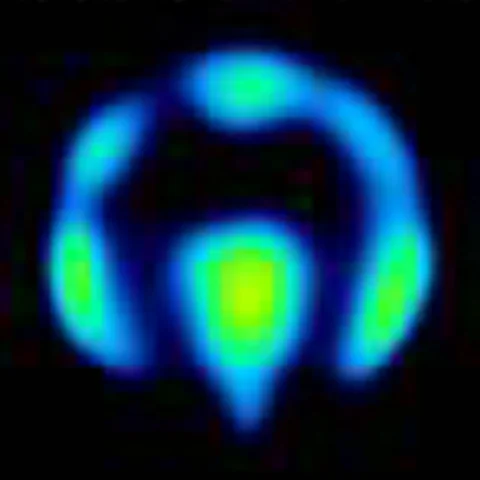
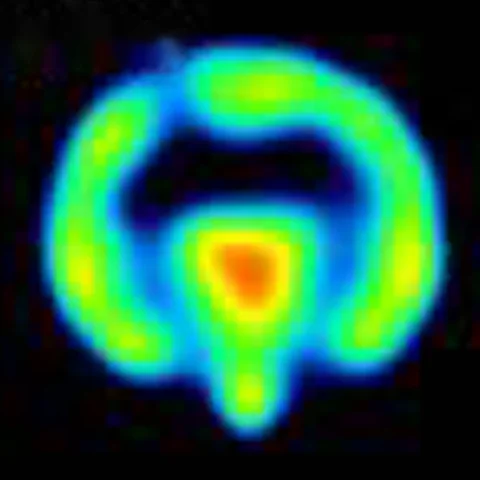
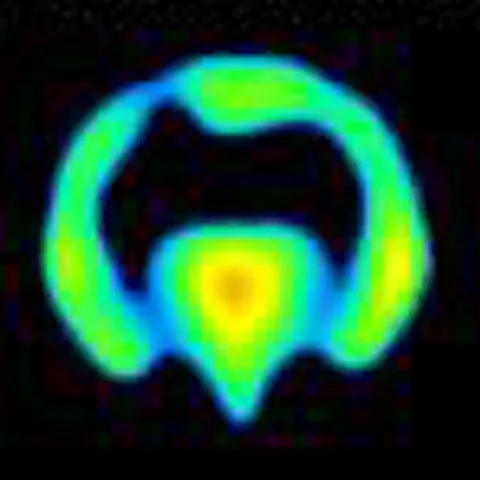
  1. Coronal PET map at baseline.Baseline
  2. Coronal PET map 8 minutes after nisoxetine.8 min after
  3. Coronal PET map 4 hours after nisoxetine.4 h after

Yohimbine PET and microdialysis

In minipigs, [11C]yohimbine binding to α2 adrenoceptors fell after drugs that raise noradrenaline, while microdialysis in the same animals measured the rise in extracellular noradrenaline; the two changes were inversely correlated. This supports the use of changes in [11C]yohimbine binding as an indirect marker of noradrenaline release, with microdialysis providing complementary measurements of extracellular noradrenaline.

Landau et al., Biomolecules 2023 · doi:10.3390/biom13040674 · [11C]yohimbine VT, minipig, after nisoxetine · CC BY 4.0, cropped; labels removed.

More synaptic imaging findings · How we check PET against tissue · All publications

People

The people behind the work

Led by Anne M. Landau, Associate Professor at the Translational Neuropsychiatry Unit, Aarhus University.

Meet the team

Latest

Papers, grants, people and events

All news and positions

  1. EventNew

    Anthony Vernon inaugurated as Honorary Skou Professor

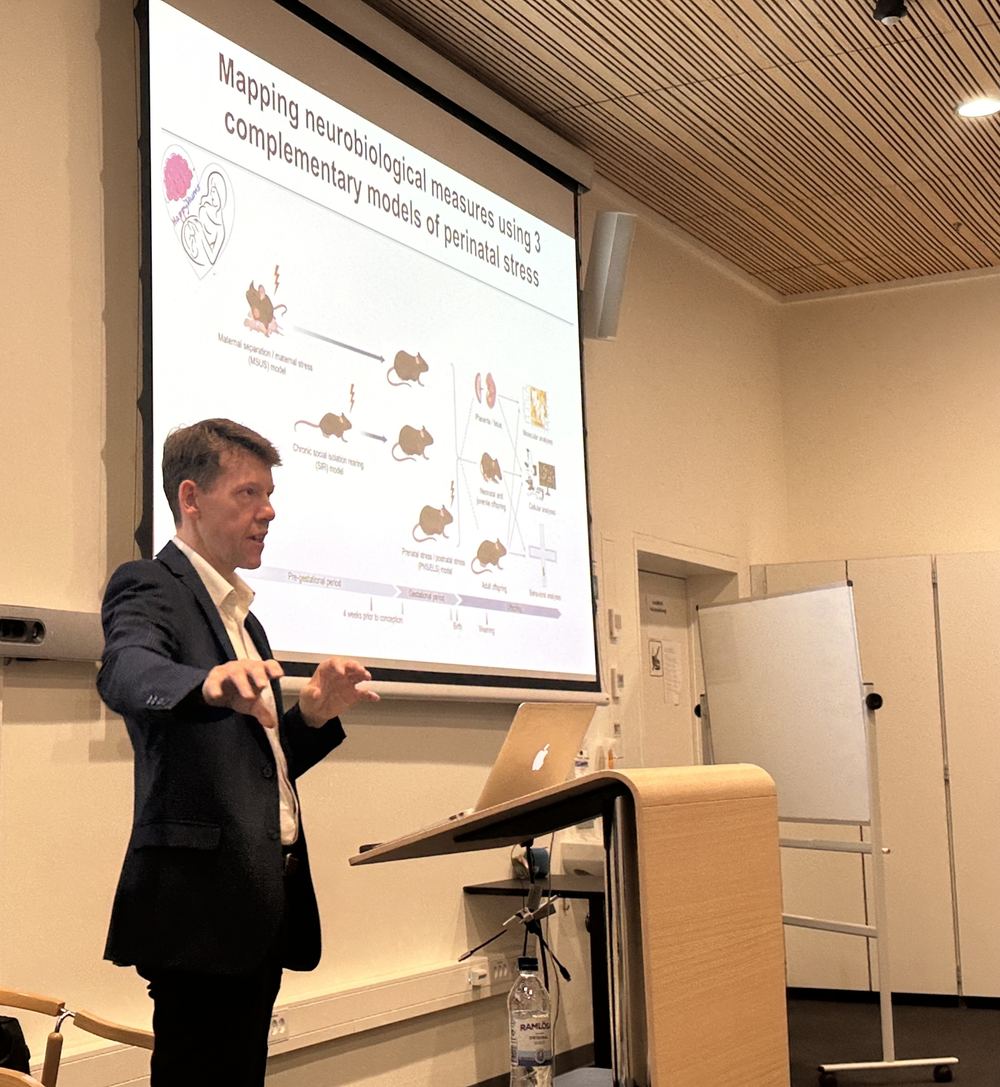
    Anthony Vernon of King's College London was inaugurated as Honorary Skou Professor at Aarhus University on 8 October 2026, the day after his pre-inaugural lecture, “From Brain to Cell and Back”, on 7 October.

    Anthony Vernon giving his pre-inaugural lecture, 7 October 2026.
  2. PaperNew

    Collaborator paper: [³H]5-MOP, a selective radiotracer for CSF1R

    Iavazzo C, et al. describe [³H]5-MOP, a novel and selective radiotracer for the colony stimulating factor-1 receptor (CSF1R), in EJNMMI Research (published 5 October 2026). Jens D. Mikkelsen is the senior author; Annie Landau is one of the co-authors.

  3. PeopleNew

    Welcome, Arezou Fathalizadeh Alamdari

    Welcome to Arezou, who joins the lab as a new PhD student, and congratulations on being awarded a PhD stipend.

  4. VideoNew

    New teaching video: What makes a good PET tracer?

    A 14-minute narrated lecture that follows [¹¹C]UCB-J through seven steps, from a research question to studies in people, using the lab's own rat and minipig data, with five pause-and-think questions.

  5. EventNew

    The Wandering Nerve: the lab's vagus nerve research at Hearts & Minds

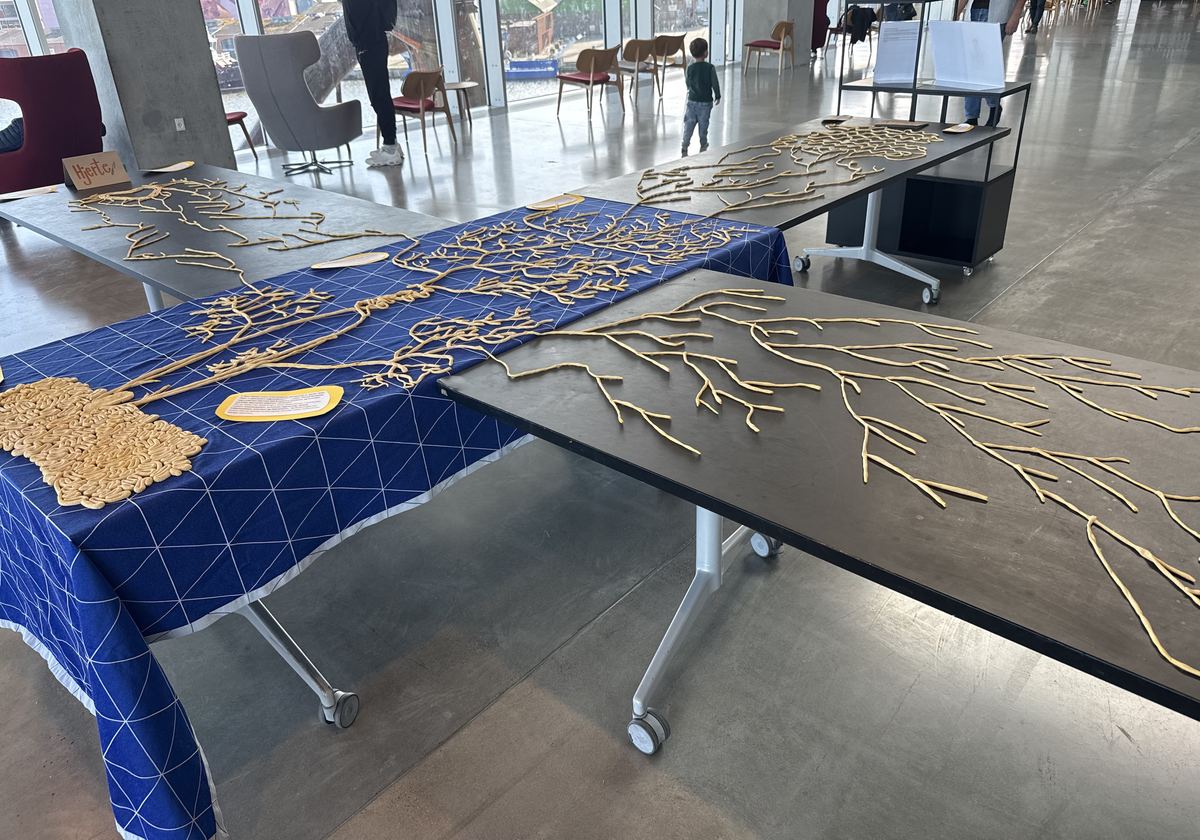
    At Folkeuniversitetet's Hearts & Minds festival at Dokk1 in Aarhus, the exhibit “The Wandering Nerve” highlighted the lab's research on transcutaneous vagus nerve stimulation. In a workshop with Dokk1's science communicator Matilda Tjellden, participants built a large model of the vagus nerve, which stayed on display over the weekend for visitors to draw on and around.

    PaperTranscutaneous vagus nerve stimulation and SV2A in the rat brain · Binda et al., Psychophysiology 2025

    The exhibit at Dokk1: a large hand-made model of the vagus nerve, its branches spread across several tables.
  6. Event

    Invited lecture: Davide Folloni, “Non-invasive ultrasound technologies to understand deep brain circuits”

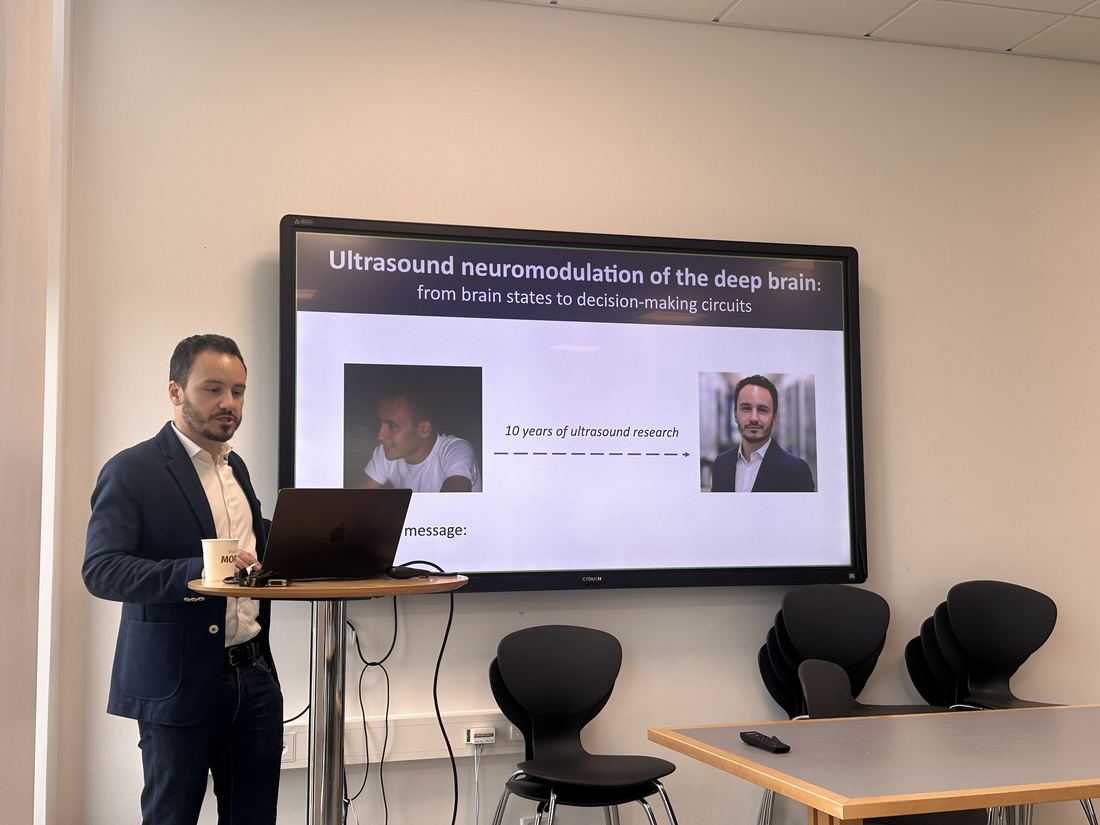
    Davide Folloni, a former ERASMUS student in the lab and now an ERC Starting Grant holder at UniSR (Università Vita-Salute San Raffaele), spoke at TNU about using neuroimaging and focused ultrasound to study deep brain circuits for mood, learning and decision-making.

    Davide Folloni beside his title slide during his invited lecture at TNU.

Lab life

All lab life

From signal to evidence · 0:46 · best with soundSources and credits →